A recurring theme throughout the event was this: It’s not about the next methodology. It’s not about buzzwords. It’s not about yet another change framework. It’s about the questions beneath the surface.
One of the key messages from my presentation was that transformation does not succeed simply because it has been carefully planned. It succeeds when people understand it, recognise its relevance to their own context, see their role within it and ultimately commit to it. “Otherwise, the limits of our language become the limits of the world we are able to imagine.” (loosely inspired by Wittgenstein)
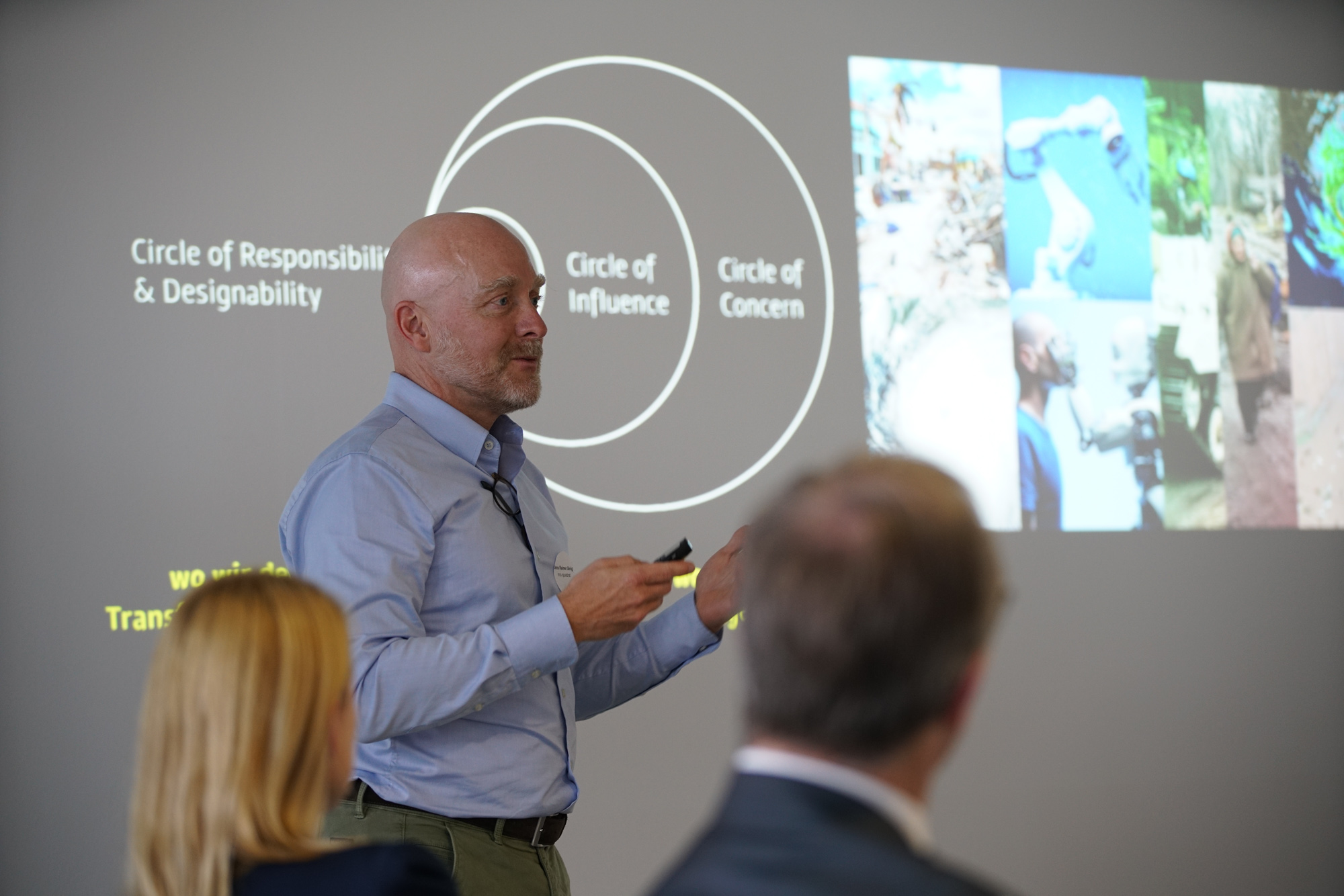
The strategic importance of communication lies in the fact that it is far more than a downstream process for conveying information during transformation. It is not a ‘rollout’ that takes place after the actual work has been done. Nor is it simply a matter of internal communication.
Transformation communication determines whether:
If communication is conceived and implemented too late, a different narrative will already have taken hold: in corridors, teams, management circles, staff meetings, chats and informal conversations. Transformation is then interpreted not through the lens of strategy, but through memories, experiences, disappointments, assumptions and established patterns of thought and behaviour.
Anyone who wants to shape communication for the future must first understand the organisation’s narrative past. Organisational memory cannot simply be erased; it is always there.
This is precisely why transformations need an adaptive narrative that does more than motivate. It must explain, contextualise, connect, acknowledge tensions, tolerate ambiguity and provide direction without artificially reducing complexity.
What made the evening particularly valuable to me was the encounter between Katharina Hochfeld ’s and Simone Kaiser’s scientifically grounded perspective, drawing on readiness, cultural and transformation analysis, and the practical question of how communication can turn insight into action.

The result was not a ‘how-to’ guide. Rather, it was something far more valuable: a collective reflection on what transformation truly requires today, at a time when the accelerating pace of change is laying bare weaknesses in leadership, culture, and organisational and operational structures.
Honest. Direct. Substantive. Unvarnished.

Transformation requires data as a foundation. Transformation requires clear visions. Transformation requires thoughtful leadership. And it requires communication that does far more than explain: communication during transformation must provide direction, create connection and turn the decisions of a few into shared understanding and collective action.
Thank you to Katharina Hochfeld, Simone Kaiser, Fraunhofer IAO/CeRRI and everyone who contributed to the open discussion.
We'd love to host another session like this. If you weren't able to join us this time, feel free to send us a direct message with your email address and we'll make sure you receive an invitation next time.


